Showing posts with label Research: Words. Show all posts

Friday, February 14, 2014


Medieval Valentine's Day Terms of Endearments


Wish to distinguish your Valentine's Day compliments and endearments from the riffraff? How about polishing up your knowledge of Middle English? The Clerk of Oxford offers two lists here and here.

After reading those posts, you should be able to put something like this together:

myn lykyng, of alle women fairest to behold — the one I delight in, [you] are the fairest of all women to behold

or

dearling, my sweet leof — darling, my sweet life

or

This hevy lif I lede, lo, for your sake
Thogh ye therof in no wyse hede take,
Myn hertes lady and hool my lyves quene.

Wednesday, April 25, 2012


Errors in the Use of Words: Mistakes of Purists from 1905


In The Art of Writing & Speaking the English Language (The Old Greek Press, 1905), Sherwin Cody refers to his pocket-sized book as a book of quick study rather than an exhaustive reference. So rather than correctly and strictly adhering to rules, this book aims to "add knowledge of the differences and shades of meaning, fine distinctions in the values of words, and variety of expression."

Through his book, Cody says he has "tried to lead the student to a nicer discrimination in the meanings and values of words in common use, and to avoid making a pedantic prig of him. While purity of language is greatly to be desired, nothing is more amusing than to read the tirades of the purists."

He continues, "There is a vast amount of rubbish afloat about good and bad usage, and I know no class of pedants more disagreeable than those who set up to correct the English of everybody else. I want to make language freer more accurate, and more expressive, not stiffer, drier, and deader. (How the 'stiffs' will carp at that word 'deader'! Let them!)"

In the late 1800s, every time a comprehensive/official/correct book by one of the purists came out, a host of fellow purists waited in line to tear it down. Cody said that it got to be so that "it became dangerous to open one's mouth."

(This sentiment has a modern-day ring to it, doesn't it?)

He then goes on to say that this is all wrong. "Language is for the purpose of expression, and it is full of elisions, substitutions, comparisons suggested, and words used in certain phrases with meanings purely idiomatic and unexplainable. If we frighten ourselves with a bugaboo of errors, we shall become stiff and awkward."

Are you nodding your head as empahtically as I am?

As every writer and reader knows, such specious arguments about language still abound. We're told that language should not be like this, but should be like that.

For example, in Cody's day, he said that they were told that a sentence should not end with a preposition. But Cody says, "Throwing the preposition to the end is one of the most thoroughly established idioms of the language."

In 1905, Cody said that it is alright for it to be so. But aren't we still fighting that battle to this day? So which rules are our modern-day pendants referring to when they say that it is incorrect usage of grammar for the sentence to end in a preposition? Eighteenth century ones?

Tuesday, May 11, 2010


Common Spelling Errors


Spelling Bee copyright by FotoSearch Dr. Language has provided a one-stop cure for all your spelling ills. Here are the 100 words most often misspelled ('misspell' is one of them). Each word has a mnemonic pill with it and, if you swallow it, it will help you to remember how to spell the word. Master the orthography of the words on this page and reduce the time you spend searching dictionaries by fifty percent.

Scrabble Tiles copyright by FotoSearch Here are some examples...

accommodate — Remember, this word is large enough to accommodate both a double [c] AND a double [m].

mischievous — This mischievous word holds two traps: [i] before [e] and [o] before [u]. Four of the five vowels in English reside here.

misspell — What is more embarrassing than to misspell the name of the problem? Just remember that it is mis + spell and that will spell you the worry about spelling "spell."

Privilege — According to the pronunciation (not "pronounciation"!) of this word, that middle vowel could be anything. Remember: two [i]s + two [e]s in that order.

Restaurant — 'Ey, you! Remember, these two words when you spell "restaurant." They are in the middle of it.

vacuum — If your head is not a vacuum, remember that the silent [e] on this one married the [u] and joined him inside the word where they are living happily ever since. Well, the evidence is suggestive but not conclusive. Anyway, spell this word with two [u]s and not like "volume."

Spelling Blocks copyright by FotoSearchMy bêtes noirs...

occasionally — Writers occasionally tire of doubling so many consonants and omit one, usually one of the [l]s. Don't you ever do it.

occurrence — Remember not only the occurrence of double double consonants in this word, but that the suffix is -ence, not -ance. No reason, just the English language keeping us on our toes.

Do you have any words that tend to trip you up?

Tuesday, December 1, 2009


Ha-Ha-Ha From The Past


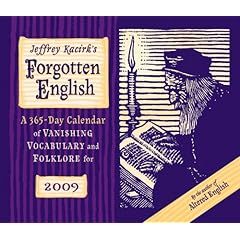
Forgotten English by Jeffrey KacirkI'm a huge (literally and figuratively) fan of Jeffrey Kacirk's Forgotten English series, which has definitions and events from history. Here are some nuggets...

If you're feeling stranny today, you may be wild or excited (from Jabez Good's Glossary of East Lincolnshire, 1900).

Satyriasis (and its female version nymphomania) is immoderate venereal appetite as a symptom of canine madness (from John Coxe's Medical Dictionary, 1817).

Today, December 1, is the 250th birthday of Guinness. Slainte! In 1759, Irishman Arthur Guinness signed a 9,000-year lease for a small brewery at St. James Gate in Leixlip, County Dublin for 45 pounds a year.

If you're overcrapped, you've given yourself to gluttony and overeating along with the attendant unpleasant aftereffects (from James Barclay's Complete and Universal Dictionary of the English Language, 1848).

Forgotten English by Jeffrey KacirkNovember 30, is the feast eve of St. Eloy, a seventh-century patron of goldsmiths, coin collecors, and metalsmiths.

You're likely to be called a convertine if you're inclined to be converted (from Sir James Murray's New English Dictionary, 1893).

London's Convent Garden Theatre opened on December 7, 1732. Almost immediately the EST (English Standard Time) of noblemen arriving late for theatre events went into place.

Anti-centenarianism is the opposition to the assertion that the persons from time to time reported to have died aged a century or more had really attained to that age (from Edward Lloyd's Encyclopaedic Dictionary, 1895).

Henry Jenkins (1501–1670) was a long-lived Englishman with a lifespan of 169 years, who lived through the reigns of nine monarchs, was a fisherman in the last century of his life, and was acquainted with one Peter Garden (1644–1775), another long-lived Englishman.

A knick-knackatorian is a dealer in knick-knacks and curiosities (from London's Annual Register, 1802).Jane Austen

Wednesday, December 16 is the birthday of Jane Austen (1775–1817) who was fond of the phrase I cannot do-withall meaning I cannot help it. Mark Twain famously remarked, "Any library is a good library that does not contain a volume by Jane Austen—even if it contains no other book."

Thursday, November 26, 2009


Bookish Gratitude List


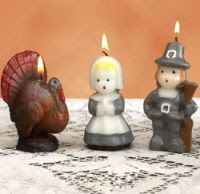
Tradition of Pilgrim and Turkey Candle Set by Vermont Country StoreIn the Spirit of Thanksgiving, Janga asked on her blog, Just Janga: "What bookly things are on your gratitude list?"

1. My dearest friends who're also authors and whose books I adore: Amanda McCabe, Anna Campbell, Diane Gaston, Christine Wells, and Candice Hern. In fact, I started out as their fans before we became friends.

2. One word decriptor of Laura Kinsale, the author and the person: Amazing!

Copyright: Dianna @hrdwrkmom.com3. Debut authors who I met at the start of their first books: Tessa Dare, Courtney Milan, Maggie Robinson, Sara Lindsey, and Vanessa Kelly. Thanks go to Avon FanLit and the Eloisa James / Julia Quinn bulletin board for the introduction to these fabulous writers who're also fabulous people.

4. Authors new to me whose entire backlists I've now glommed: C.S. Harris, Deborah Crombie, Deborah Smith, Jodi Thomas, Kris Kennedy, Madeline Huntr, Julia Latham, Michelle Willingham, C.J. Lyons, Jo Goodman, Susan Wiggs, and Julie James.

Copyright: Dianna @hrdwrkmom.com5. Folks who educate me daily: Jane and Robin of Dear Author, Smart Bitch Sarah, Sarah Frantz and Eric Selinger of scholarly persuasions, Maili, Angela James of Carina Press, Dominique Raccah, Sarah Tanner, Sarah Weinman, Melissa Klug, Bethanne Patrick, and Jackie Barbosa.

6. Romancelandia on Twitter for making it possible for me to have intelligent conversations during my solitary days.

Copyright: Dianna @hrdwrkmom.com7. PJ for her voice of reason, voice of affection, and reviewing voice, not to mention uncommon talent for chocolate-making. Janga for her encyclopedic knowledge.

8. Thanks for my daily source of laughs: Anna Campbell, Teresa Medeiros, Connie Brockway, Christina Dodd, Eloisa James, Keri Stevens, rantyeditor, Esi Sogah, Dave Barry, and Dee Tenorio.

Copyright: Dianna @hrdwrkmom.com9. The Angles, Saxons, Jutes, British Celts, Normans, Vikings, Scots, Irish, Welsh, and the vast British Commonwealth for the Queen's English. Without this rich assimilating language, what on earth would I have ever said?

10. Amanda McCabe for being an all-round good egg, the best friend a person could have.

What's on your bookly gratitude list?
Tuesday, March 10, 2009


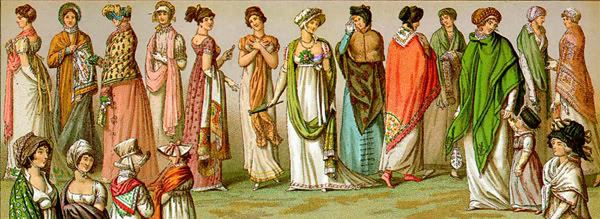
Words, Customs, and the Plain Weird


An Old-English custom: If a man is caught sleeping on Shrove Tuesday (Mardi Gras) and is kissed by a woman, he is obliged to present her with a pair of gloves.

Gardyloo is the warning cry about dirty water thrown from windows onto London streets, according to Tobias Smollett's "Expedition of Humphry Clinker" (1771).

According to Iona and Peter Opie's "Lore and Language of Schoolchildren" (1959), British youngsters commonly invoked rabbits for good fortune. 'On the first morning of the month,' notes a typical informant, 'before speaking to anyone else, one must say white rabbits, white rabbits, white rabbits, for luck.' Subject to minor modifications, the utterance of this spell appears to be accepted routine throughout Britian.

Vagitus is the distressing cry of persons under surgical operations, from Robert Hoopers's "Compendious Medical Dictionary" (1798).

A Coney-Catch is a swindler, the coney or the rabbit being considered a very simple animal.

Gwethall is the word used to denote an entire collection of household stuff, like 'bag and baggage,' according to G.C. Lewis's "Glossary of Provincial Words used in Herefordshire" (1839).

A Diurnalist is a journalist writing about the happenings of the day every day, according to Rev. John Boag's "Imperial Lexicon of the English Language" (1850).

To Treacle Up isn't akin to buttering up, but rather, to rub or polish. In the early 1900s, furniture was polishex with a mixture of beer, treacle, and vinegar, according to Edward Gepp's "Essex Dialect Dictionary" (1923).

In the 1881 census, these were some of the doozies entered for occupation: egg cracker, teacher of wax flowers, gymnast to house painter, turnip shepherd, emasculator, colourist of artificial fish, and rust attendant at lavatory.

Thursday, January 1, 2009


Griezie


According to John Mactargart's Scottish Gallovidian Encyclopedia (1824), a griezie is "a person fond of prying into matter which concern him nothing." The president of the United States is known to receive and shake hands with all who desire to call upon him on New Year's Day.

And so today, I invite all lurkers and new visitors to my blog to leave comments and voice your opinions. You will find that I'm an attentive poster and commentator.

This is the fourth year running that I have Forgotten English sitting on my desk. It's a 365-day calendar by Jeff Kacirck that delves into the meanings of strage lost words like matriotism and phrases such as marriage-music. It also catalogues abandoned holidays and traditions, outdated etiquette, historical curiosities, and quotations with verwe and humor.

I opened the first day with anticipation and griezie did not fail to disappoint. I also have a month-at-a-glance calender-mousepad with tropical beaches in the background and a week-at-a-glance pocket planner, not to mention, a list of goals and a spreadsheet with my schedule.

Friends and Romansistas, are you as calendar obsessed as I am? What goals do you have down for the year? the month? the first day? Of course, I am a griezie...and proud of it.

Wednesday, October 15, 2008


Happy Birthday, Noah Webster!


Cacography as documented in its first use in Thomas Blount's Glossographia (1656) refers to bad spelling or ill writing. This is something that lexicographers for eons before and eons after tried to correct in the unwashed masses.

Noah WebsterOne such living in the American counterpart of the Georgian-Regency period was Noah Webster (1758–1843). Another admonisher was wordsmith Benjamin Franklin (1706–1790).

When Webster was ten years old, Franklin published his unpopular Scheme for a New Alphabet and a Reformed Mode of Spelling, which recommended that the alphabet be remodeed. Under Franklin's plan, six new letters would be added, and all thirty-two would function phonetically. Franklin argued, "As our alphabet now stands, the bad spelling, or what is called so, is generally the best."

Noah WebsterYears later, Webster offered a simplified solution but, like Franklin's proposal, it was roundly ridiculed and rejected.
Webster did, however, pioneer the deletion of unnecessary letters from certain words, such as the 'U' from neighbour, colour, and honour and the 'K' from musick, publick, and mechanick, thereby setting American English irrevocably on a path divergent from its parent language.

"England and America are two nations separated by a common language." —George Bernard Shaw

RomanistasSo, Romanistas...
Which other words did Webster set out to "improve"? Which ones are you favs?