Showing posts with label Leisure: Travel. Show all posts

Wednesday, September 17, 2014


2014 TBR Reading Challenge: From Bath With Love by Bob Croxford


As part of Wendy Crutcher's 2014 TBR Challenge, here are my brief comments on From Bath With Love by bob Croxford.

I picked up this book at The Beau Monde conference silent auction in July 2010. The conference was held in conjunction with the annual conference of the Romance Writers of America. The book subsequently languished on my to-be-read pile for years, until I rescued it from obscurity in July for consultation for my blog for the Risky Regencies on the beauties and histories of Bath. Having enjoyed reading it, I thought it would be perfect for my September TBR Reading Challenge post.

Bob Croxford makes Bath in Somerset, England come alive though his gorgeous photography. He captures the highlights of the features of Bath and includes funny, poignant, and very relevant quotes from people in history who traveled to Bath and enjoyed the experience. The oldest of the quotes is by Tacitus from 80 CE and the newest is by Christopher Lee in 1995. Luminaries included are R.L. Stevenson, Jane Austen, Georgette Heyer, Samuel Johnson, William Herschel, Christopher Anstey, Mirza Abul Hassan Khan, and many others.

The book is organized with one large picture on one of the pages and a small picture and 2–3 quotes on the facing page. The order of items included can be taken as a visitors' guidebook.

His opening salvo is of the eye-catching Royal Crescent of buildings that is the iconic image of Bath. He encourages a visit to the Number One townhouse to see a typical 18th century home. A visit to the Lansdown Crescent and The Circus crescent is also recommended.

He then features pictures of the Roman Baths, the reason why visitors have poured into the city for seventeen hundred years. The hot bubbling sulfurous mineral waters were said to cure various ailments of all those who bathed in it and drank it. The baths are followed by a visit to the Grand Pump Room (now restaurant) and then the Bath Abbey. A stop for Bath buns at Sally Lunn's House is suggest as a good idea; you can also see a Victorian post box there. To quench your thirst, he recommends a visit to The Roundhouse.

Relax the afternoon away in the Jubilee Gardens or the Victoria Gardens, and visit the theater in the evening at the New Theater Royal. While the Pulteney Bridge doesn't have quite the same cachet as Paris's Pont Neuf, do spend your late summer evening browsing around and sighing over the Pulteney.

In addition to all the architecture marvels, he includes a small series of photographs on what he called Floral Bath. These are pictures of window boxes, hanging baskets, and upright pots displaying a riot of colors of flowers of all shapes and sizes and types.

Monday, October 7, 2013


Become the Real Monarch of the Glen


Image copyrighted by StruttAndParker.com Have you seen the BBC TV series Monarch of the Glen? For American viewers, five of the seasons are available in their entirety on Netflix.

The Monarch of the Glen series is loosely based on Sir Compton Mackenzie's Highland Novels. The main storyline is of an urban restaurateur and scion of the laird returning to the estate of Glenbogle in the Scottish Highlands to attempt to restore the estate to its former glory. He struggles against seemingly insurmountable odds, many of which have to do with the eccentrics living there.

The people of this series are what makes it memorable—they are all unforgettably batty in their own unique way. Makes for many hilarious moments, some completely unintentional. Superb acting all around though. Downton Abbey's director Julian Fellowes is one of the secondary characters.

Image copyrighted by StruttAndParker.com While you may not be barmy, you could still be a modern-day Monarch of the Glen by putting down a spare seven million pounds to buy Balavil House. The house is known in the series as Kilwillie Castle and the 7500-acre lands are part of Glenbogle.

Now, for the first time in 200 years, this estate near Kinguissie in Inverness is up for sale. It has been owned by Allan Macpherson-Fletcher's family since 1790. The estate allows visitors to stalk red deer, shoot grouse and pheasant, and fish for salmon along the acres running from the River Spey up into the mountains of the Monadhliaths.

Some of the amenities of this lovely manor house include ten bedrooms with private bathrooms, central eating, a fully equipped gun room (see above), a 36-foot dining room, and a huge Victorian style kitchen. For detailed pictures, go HERE.

Tuesday, May 14, 2013


Collecting Memorabilia and Displaying It


Memorabilia, the detritus of one's life and also the raison d'être.

In his article "Flights of Fancy" for the April 2013 issue of the Smithsonian, playwright David Mamet waxes eloquent on his collection of memorabilia and the stories behind the items. "My various workplaces are cork-walled and covered in remembrances, of the early motion picture studios, of the railroads, of long-forgotten politicals wars."

Now, most romance readers collect author promo items, which we call swag. So let's have it: What is in your collection, swag or memorabilia? And where do you put it?

Most of my authorial swag is in paper form and is in binders of plastic sleeves. I have one sleeve dedicated to each of my top favorite authors and then sometimes shared sleeves for author groups (authors who are friends, fellow bloggers, write in the same sub-genre, etc.). In each sleeve, I have signed coverflats, post-its, bookmarks, postcards, handwritten notes, trading cards, and business cards. Other than binders, I have totes, pens, chapstick, chip clips, compacts, pens, hand mirrors, pens, coasters, and writing pads, which I use every day. It keeps the memory of the authors and their books alive in my mind every time I see one of those items.

One of my most favorite items of non-authorial swag is the concert program and ticket of Zubin Mehta's appearance as the conductor of the Israel Philharmonic Orchestra. What a concert that was—a symphony :) of Webern and Beethoven.

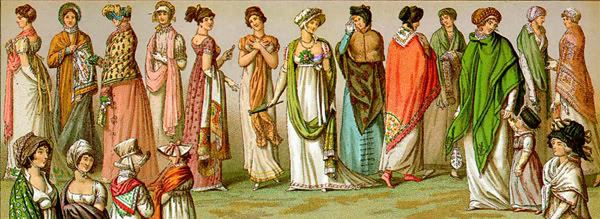
Another treasured part of my collection is the set of five original colored prints of Regency gowns from the catalog La Belle Assemblée.

Here's a picture of one of my cork boards chockablock with memories:

(Click on the image to see a bigger version.)


Top left is Nora Roberts's annual magnet showing book releases by month as well as a calendar for the year. Below that is a small postcard of the Tibetan Festival I attended four years ago here. Under that is the aqua card from my husband that reminds me to "Listen Closely" because he knows that a writer is in the process of becoming. The rare Bridgertons bookmark by Julia Quinn hangs off the bottom left edge and is cozied up to a collection of four make-believe vintage romance novel covers. Above that is a picture of a study filled with warm wood furniture and lots of sunlight streaming in through the wide windows. This is my dream of a study to sit and write in.

"Park your car. Drive Fluevog." is a sticker sign that Canadian speciality shoemaker John Fluevog puts out. Above that are two wonderful memories of a Hawaiian trip: a wooden postcard with dolphins and whales and a wooden ukulele bookmark. Above the ukulele are three versions of my business cards. Below it is a bookmark by a person on eBay who designed my custom ex libris bookplates.

The bookmark from Titlepage and the occasional tweet by Odile reminds me of an attempt at an online literary disucssion circle with authors, a virtual soapbox that is a 21st century version of the Algonquin Round Table, produced and presented by Daniel Menaker.

Right above that is a bookmark from The Beau Monde, a special interest chapter of the Romance Writers of America. Next to this bookmark is a filligree metal bookmark of Sydney, sent to me by friend and author Anna Campbell. And right above that is my favorite button of all time: SquawkRadio. It was a group of five authors (Eloisa James, Connie Brockway, Christina Dodd, Lisa Kleypas, and Elizabeth Bevarly) who came together to create one of the very first online group author blogs. SquawkRadio was also my first introduction to the online romance community, affectionately known as Romancelandia.

Top right is the cardboard insert that came with my Jane Austen action figure—she came with a writing desk, quill, and a seriously fashionable outfit. To the left of that is a bookmark reminding me to "never judge a book by its movie," not that I am in danger of doing so. Below that is a post-it by fave historical author Candice Hern. Business cards from The Perfumed Court and Threadless highlight my current interests in perfume samples (including Queen Victoria's and Audrey Hepburn's faves) and crowdsourced, original art T-shirts.

Front center is my aboslute favorite photograph: My ideal of where I'd like to be 24x7: On a beach, on a sunny, warm, afternoon, sitting in a comfy chair with a cool drink on the table next to me, listening to the waves and reading a book. Below that is a lotion bottle wrapper from Island Bath and Body in Plumeria-Vanilla—Hawaiian heaven in a bottle. The button below that features some of the group of then aspiring and now published romance writers who used to frequent the SquawkRadio blog and the Eloisa James message board: The Bon Bons.

To the right of that is a gorgeous handmade purse of lavendar silk, plaid top, and beaded outline and handle. It's not a purse that can see heavy usage, but is a minor sort of a coin purse purely for your viewing pleasure. To the right of that is a tea bag packet from the tin of Fortnum and Mason tea I had picked up on my trip to London (part one, part two, and part three).

Top center is a picture of a completely chaotic office, where the mother's sitting under the desk and the baby in diapers rules the roost by commanding the room's computer. In his essay, Mamet laments the advent of the computer. "One unfortunate byproduct of [the computer] is the elimination of the physical artifact: the flight log, the sectional map, the postcard, the pin-back button and the poster—in short, of memorabilia."

Friday, August 26, 2011


Picture Day Friday


Image copyrighted by http://bornagainredneck.blogspot.com

Friday, August 5, 2011


Picture Day Friday


Aurora Borealis off the coast of Greenland

Friday, March 25, 2011


Picture Day Friday


One day, I'd like to go here: Antarctica...

Copyrighted by GeographicGuide.com

Copyrighted by Alaska-in-Pictures.com

Copyrighted by NationalGeographic.com

Friday, January 28, 2011


Picture Day Friday


Image copyrighted by turtlebayresort.com

Cottage on the beach in Hawaii: Another of the items on my Life List.

Monday, September 27, 2010


London Trip ... Part Three


This is my final installment in my Trip to London series. Part ONE and Part TWO are found here.

Sir John Soane's Museum

Sir John Soane used his entire London townhouse like an advertisement for his architectural business (which he ran out of his home) as well as a showcase for his myriad collections of Greek, Roman, and Chinese ceramics, paintings, woodwork, etc. He was an early adopter of gas lighting inside the house (1824) for the same reason. He put together vellum bound copies of all his ideas, designs, and projects as a marketing tool for new clients stopping by. He also made extensive use of Picture Planes— multiple panels of framed ideas that either he or his assistants drew and painted that could be opened and blended in seamlessly into the wall when closed. Soane was known for his use of lights and spaces. Colored glass and mirrors, all angled and/or curved, is how he manipulated the light and space of a room. Soane also believed in curvaceous didactic architectural details that are natural as opposed to geometric lines that are man-made. He did bow to his clients' demand for Gothic and Palladian features, which were in fashion then.

Soane was lucky that his wife came into some money fairly early in his career, so he was able to buy into the Lincoln Fields terrace houses (two side-by-sides made into one). This edge of Grosvenor Square was like an architectural and artistic ghetto. Architect Robert Adam, painters Turner and Jackson, and Shakespearean actor Garrick were Soane's contemporaries. Garrick and Soane shared their love for Hogarth and Shakespearean folios. Soane was very fond of John Robbins's Regency furniture. Hogarth's Rake's Progress is a series of paintings that depict the wheel of fortune turning in a gentleman's life. Hogarth painted these not for money but for social commentary. (Asides: Turner's yellow color is a non-hierarchical color and lexicographer Dr. Samuel Johnson was Garrick's teacher.)

Soane was very proud of his Seti I's sarcophagus that he acquired from Belzoni in 1817. (Yes, one of the myriad Egyptian treasures Belzoni stole from the Valley of the Kings he excavated.) The British Museum dithered over the price of 20,000 pounds, which Soane promptly paid. He then held a three-day open house. The sarcophagus was lit from within and outside with specially commissioned lamps. All of London came to gawk, including Prinny.

Soane's townhouse is the norm for London town homes: steps leading up to a polished door with brass fittings and knocker. A narrow entry way and hallway lead to a long rectangular library on the right and stairs to the kitchen downstairs and to the upstairs bedrooms on the left. The library was the most spectacular of all his rooms, since this was also the room he received his clients in. Most of his portable treasures are displayed in the room. The ceiling is painted, paneled, with extensive mouldings and finials and also features paintings.

One narrow door leads to the breakfast parlor in the back. Another even narrower door leads to his small study that leads into his dressing room (so if a client showed up while was working, he could be appropriately coated and bewigged. This leads further back into his atelier, which also has a back entrance so all this staff could quietly come to work without disturbing the household.

Upstairs, he had an informal ante-drawing room that led to the main formal drawing room, with tall Georgian windows, expensive silk wall coverings, mouldings, the requisite pianoforte, and graceful Regency furniture (read: curvy). (The ottoman was particularly funky: rectangular with a top that dipped and curved up, so one end was higher than the other, supported by two short legs and two long ones.)

British Library

We saw the Magnificent Maps exhibit (temporary) and the manuscripts room (permanent). Handwritten manuscripts from 500, 1000, 1500 years ago. Yes, my breath stopped time and time again in my throat as I toured the manuscripts room.

"Reader — I married him." So begins the concluding chapter of Jane Eyre by Charlotte Brontë in her own hand. Jane Austen's notebook and actual writing lap desk (yes!) was a few cases down the row. Personal opinion: Jane had better handwriting than Charlotte. Wordsworth's was execrable. Milton's was rather odd; it changed radically even across two facing pages, and especially when he changed languages. Darwin loved white space—between words and between lines, too. Freud hated it—yes, amateur psychoanalysis labels him anal-retentive if judging by his handwriting. Oscar Wilde used horizontal curvy lines as strikethroughs instead of the standard straight lines.

Thomas Hardy was distressed when his critics in 1890s called his book Tess of the d'Urbervilles "a mere story of adultery." A hundred and twenty years later, reception for romance novels hasn't changed much, has it?

On July 10, 1843, Ada Lovelace wrote a letter to Charles Babbage that set down on paper the first principle of a computer program that was a group of calculations solely by machine.

Whoever wrote Beowulf had gorgeous writing. Eleven hundred years old. I wanted to cry as stared at it.

I was less teary-eyed but nevertheless touched as I looked upon Cuthbert's Gospel of John from the late seventh century (it was discovered in his coffin); the Codex Alexandrinus, the earliest whole bible in Greek, from the fourth century; the Golden Haggadah; and the Mamluk Qur’an.

There they were in all their glory: the Magna Carta, Piers Plowman, Sir Gawain and the Green Knight, the first printed Gutenberg Bible, and a personal prayer roll (rolled parchment, not in book format) with illustrations and fancy lettering.

The biggest disappointing part was the absence of the Lindisfarne Gospels; they were off being restored. The best surprises were two Persian manuscripts in the medieval Pahlavi language. The fourteenth century Shahanshahnama by Ahmad Tabrizi from Shiraz in southern Iran was the most beautiful illuminated manuscript in the entire room; it's an account in verse of Genghis Khan's conquest of Baghdad. The second surprise was the 1610 Persian court translation of the Panchantantra Tales from Sanskrit to Pahlavi, illustrated in the Mughal style at the court of Prince Salim (who later became Emperor Jahangir of the Taj Mahal fame) in Allahabad, India.

Musical manuscripts also formed a part of the collection. The Anglo-Saxon Neumes are graphic signs showing the direction of the melody and the details of the music, but not the precise pitch since they lacked staffs and measures. The Caligula Troper was written during the Norman Conquest and is a bound, illustrated book with alternating lines of notes with lines of words. Beautifully illustrated with color, it features colophons for the first letter of the first word of every new verse. Handwritten sheet music by Mozart, Beethoven, Haydn, and Purcell features off liner notes with jokes, asides, and stage directions. Schubert's sheets were so messy, it's a wonder anyone was ever able to read them.

I held my hand over the glass case, as though through osmosis via the air and glass, I could be closer to Austen's words and Mozart's notes. You could feel the collective reverence in the air as people gazed in awe at the manuscripts, some of them 1500 years old. If nothing else, that convinced me that thinking of a book as merely its contents and not its original format was a disservice to the value of a book. Centuries ago, the hand of genius had dipped its quill in ink and scratched across the surface of that paper, enshrining the glory of creation forever. No digital recreation can encapsulate that.

Osterley

It was a hurried trip and there were many discussions during the tour, so I didn't get many notes written down; I only have impressions of the rooms I walked through. Robert Adam was the architect and built Osterley as a Palladian Palace, with a staggering entrance that was a covered front Porte-cochère-like area set up from a series of elephantine steps that lead into the grand entry hall inside magnificent front double doors. Everything in this house is built to a scale ranging from grand to grandiose.

A few things that were unusual: young misses of the house took harpsichord as well as pianoforte lessons, the fireplace grills were made of an alloy of copper and zinc called paktome, the inner shutters were designed to be flush with the wall when open and folded back, and the downstairs public rooms had double doors for privacy (for example, to separate women in the drawing room from the men in the dining room after dinner).

There were eager National Trust docents (warders?) in every room to impart very detailed information of every aspect of their rooms. They had so much stuff to tell and because I showed interest in listening, they talked my ear off. One even followed me into two other rooms and entered into three-way discussions with the other warders. My many thanks to them for their dedication and their willingness to educate me.

Monday, September 20, 2010


London Trip ... Part Two


I loved London. For the sights, the sounds, the smells...everything. Above all, it's the sustaining sense of history. People have been here through hundreds of years, and some of those places have been in continuous use till present day.

Mayfair Walkabout

The London Walks is a marvelous way to visit places. It's just not something you'd want to do with kids. You meet outside designated tube stations and pay when you meet (so if you change your mind, that's OK). Be warned though, the guides talk and walk fast. There's almost no time to click photos, much less take notes. Also if the crowd's big, hearing the guide talk can be a challenge. The Mayfair walk was especially interesting, because they give you juicy historical on dits that you wouldn't find in most guidebooks or research guides. Walking down the streets, staring at the building façades while a voice in your ear tells you something naughty about its famous residents is a lot of fun. We saw Brummell's house, Handel's garrett where full-blown operatic vocal rehearsals were held (often times not to the delight of the neighbors), Shepherd's Market, a club that Lady Diana Spencer loved, and so on. Seeing the poky entrances and dingy kitchen quarters gives you a renewed sense of how hard life was for the ones belowstairs. Seeing those ancient trees in Berkeley Square gardens were a great lift. People I'm writing about walked through the same lanes I was now treading on.

British Museum

I mainly visited rooms 40 and 41, which were the medieval rooms. Gawked at the sheer number of bright, yellow gold jewelry and household items. Unsurprisingly, gold was also used in warrior-ware, such as sword fittings, surcoats, and horse buckles. Was surprised to see so much glass objects in daily use in the early middle ages: cups, beakers, footed bowls, and serving bowls. Case in point was a brown glass claw beaker from sixth century Kent. Lesser metals, such as silver and bronze, and woods, such as burr walnut and maple, were also used to make bowls, ladles, spoons, cups, and other household goods. Poorer folks made do with lead alloy jewelry (especially brooches) in lieu of more expensive pieces made from gold, silver, bronze, and precious and semi-precious gems. Horn, cowrie shells, bone, crystal, amber, and glass beads were also pressed into service for elaborate pieces.

I readily confess, this was the first time I had clapped eyes on a real sword. This was a battle sword, but one of the more agile ones (not a longsword or a broadsword). I laid my arm against the case glass to measure how long it was (full arm length plus eight inches). I stood there for a while trying to work out how my adventurous heroine could get this out of her stolen scabbard attached to her waist. Her arm would simply not have been long enough to pull it out all the way. I tried moving my body and arms in various poses and angles, only to realize I was attracting considerable amused attention from others around me. *sheepish*

National Portrait Gallery

Visited the Tudor, Elizabethan, Georgian, and Regency rooms. The highlight was seeing Cassondra's sketch of Jane Austen. Bought a postcard of it. She was beautiful! (I didn't have time, but if you have ten minutes to spare, you can get an 11 x 14 poster printed on site of any picture in the Gallery.) Of course, Prinny was there in full portly glory, the overhang very visible given that I was viewing his picture from below. The Elizabethan room was for Ms. Wee, because she adores dresses with panniers and she adores Amanda McCabe whose heart was captured by Queen Elizabeth I in college.

Tower of London

I'd been told that this was a highly visited tourist spot. So I applied Michelle Willingham's Disney World principles: Buy tickets online beforehand, get there when it opens, and do the heavily visited bits first. As a result, there was no line for the crown jewels. We went around the displays from the front and back twice. It was exciting to see the various coronation and daily crowns. Two of the notable diamonds that the British Empire stole and fitted into a sceptre and crown respectively are: The Star of Africa was 530 carats of perfect clarity and the Kohinoor Diamond of India was 186 carats of perfect clarity. The Kohinoor was added to their treasury when they annexed the Punjab in 1849. The Kohi of Noor (Mountian of Light) was said to be unlucky for men and thus was only set for queens, so it was fit into the crown that Queen Elizabeth II's Queen Mum wore. (Aside: Visited the famous Ravens of the Tower. I hadn't realized ravens are so much bigger than crows. I was hoping to see jackdaws (even bigger), too, but no luck there.)

The Beefeater Warders' tour gave a great overview of the history of the folks unlucky to find their way within the walls. Our warder's crowning comment to the Americans in the crowd: "See, if you'd only paid your taxes, this history could've been yours." Hah! We skipped touring the prisons and locations of the more gruesome events. The Fit for a King exhibit in the White Tower was a fun look at armors and weaponry through the ages. It was great to see how plate armor evolved and became more ergonomic, so if a knight fell, he didn't need couple other people to hoist him upright and back up his horse. Here, Ms. Wee proved especially helpful, because she'd memorized all kinds of details about chainmail and armor and served the voice in my ear as we moved from one station to another. We even had a much ewww-inducing look at the garderobe. Walked out to take pictures of the Tower Bridge.

Noticed three animal duos used on shields at various times in the past millennium: the lion and the unicorn, lion and lion, and hart and lion. Two commonly used mottos on the shields were: "Dieu et Mon Droit" and "Honi soit qui mal y pense."

St Paul's Cathedral

That magnificient dome, that's part of London's skyline, remained standing despite targeted runs by the Luftwaffe. The staff was smart to remove all the stained glass and store it away in the basement so none of it was destroyed as it happened all across the city. The current cathedral, the fourth to stand on the same site, was designed by Sir Christopher Wren in 1675, after the former one was destroyed by the Great Fire of London (started by a careless baker). There're three walkways that are higher and higher up the dome, and while the walk up the 400+ steps to the very top is a hike, the close-up look at the carvings and paintings plus the views across the city from the very top are worth every huff and puff and pant along the way. Take a strong pair of binoculars if you don't wish to make the hike up. And do thank Queen Victoria for this beautification of the interior—she complained that the dingy, dreary interior was most undevotional. The thrill for me was in looking at the tombs of some of the most famous residents of the city.

In August, choirs across the city take holidays. Some churches, like St. Paul's, don't have alternate choirs and offer recited prayers in lieu of Evensong (usually 5pm). While we waited for the service to start, we heard the magnificient organ in play, the very same the 1695 organ which Mendelssohn once played. Diana and Charles were married there in the rotunda under the dome where we stood. And William, when he chooses to marry his Kate, will be married there, too.

Westminster Abbey

We took another London Walks tour for the Abbey. Westminster was founded as a Norman church by Edward the Confessor in 1065. The white stone of parts of the Abbey is the expensive stone versus the cheap yellow Cotswold stone. The Dark Cloister that leads to the the living quarters of visiting clergy is the only remnant of the original medieval structures; it's squat with pointy arches. The Dark Cloister has rooms to the right. The left side that looks into the central courtyard, known as the Cloister Garth, has tall window arches without shutters or panes and a long-running stone bench under the arches. The rooms on the right include the Muniments chamber for housing legal church documents, the Pyx chamber (which formed the undercroft of the monks' dormitory) for chests of documents, the Chapter House chamber where everyone went in the morning for their daily chores list (aside from regular assignments), and the relics (pieces of the true cross and the Virgin Mary's robe and the stone Christ stepped on before climbing up to the cross). A door within the vestibule dates from around 1050 and is believed to be the oldest in England.

Part of the thrill here, too, were the tombs and plaques in place of tombs for some. Some of the tombs are adorned with life-like death masks. Darwin is buried there—perfect irony: reject the man, accept his fame. However, not all the clergy was against Darwin. In the memorial sermon the Bishop of Carlisle, Harvey Goodwin, preached in the Abbey on the Sunday following the funeral, he said, "I think that the interment of the remains of Mr Darwin in Westminster Abbey is in accordance with the judgment of the wisest of his countrymen…It would have been unfortunate if anything had occurred to give weight and currency to the foolish notion which some have diligently propagated, but for which Mr. Darwin was not responsible, that there is a necessary conflict between a knowledge of Nature and belief in God."

Some of the entombed denizens include, Edward the Confessor, Henry III, Elizabeth I and Mary, Mary of Scots, Chaucer, Henry Purcell, Newton, Handel, and even Laurence Olivier. Plaques are in place for Austen, Byron, Samuel Johnson, Milton, Wordsworth, and other poets, writers, scientists, musicians, architects, and actors.

Among the many treasures of the Abbey is the Coronation Chair. The Stone of Scone, stolen from the Scots, is currently at Edinburgh Castle, and will be returned to the Abbey for the next coronation. We walked through the Great West doors of the Abbey, through the nave, past the quire (with the choir seating), and stood under tall square ceiling opposite the Great North doors. It's a path walked by all the kings and queens have taken, since Duke William of Normandy, for their coronation. William, when he ascends the throne, will be crowned there, too.

(Aside: On 17 September 2010, Pope Benedict XVI became the first pope to set foot in Westminster Abbey.)

We went there one evening for their Evensong service (5pm except Wednesdays). The choir was on holiday but were replaced by the visiting Ely Cathedral Choirs of Girls and Men. Imagine voices accompanied by the grand pipe organ raised to the 100-foot-high ceiling of the Abbey. Those soaring high As and Bs. It's indescribable. I was in tears. This was our last evening of the trip. And it brought this trip and my previous trip to England in full circles. In my previous trip in 2002, I had visited Lindisfarne and St Aidan's Church in Bamburg. The Evensong service was in memory of Aidan, Bishop of Lindisfarne in 650. The service was also in memory of Princess Diana (that's how they wrote it). The choir's final piece was a traditional American spiritual from A Child of our Time by Michael Tippett (1905–1998).
Monday, September 13, 2010


London Trip ... Part One


As you all know, I started out with a highly ambitious itinerary. As reality would have it, weather (rain and cold) and family necessitated some changes. Despite it all, we had an enjoyable, educational, and successful trip. Heartfelt gratitude for it goes to my family for their patience and for making it all possible.

Logistics

We rented a poky, dusty, regrettable place in a highly desirable location: steps from Charing Cross tube station. This made trips to see everything 10-15 minutes at most. We bought an eight-day travel card for the Underground and used that exclusively. (Much cheaper, faster, and reliable than cabs.) However, be careful when choosing which zones you'll be traveling in. Off-zone extensions are expensive as are bus tickets (two pounds one way, change only). We bought roundtrip tickets on the Heathrow Express (the Connect is slightly slower but much cheaper) from the airport to Paddington and then took the cab to our apartment. These two trip to and fro the airport were our only cab rides. We also got one of our cell phones unlocked before leaving on the trip and bought a cheap SIM card from a store in the Strand for ten pounds. Free wi-fi is readily available with most lodging options (flats or hotels). We grocery shopped at the local Tesco for breakfast things and ocassionally picked up ready-made (AKA take-away or prêt à manger) from Marks & Spencer stalls in most tube stations. We took our camera with an additional zoom lens, a secondary camera for when we did separate things, and binoculars (useful in churches, the Eye, and for shows). Carrying a detailed street map and tube map are essential. Public institutions are free to everyone but also closed on bank (national) holidays.

Pet Peeves

Bottled water is extremely expensive (one to two pounds for a litre bottle). Drinking water fountains are rare, as are toilets. The last was the most irksome, especially when traveling with kids. This, however, did yield one rare benefit: We were allowed to use the Queen's bathroom at Buckingham Palace. No, the toilet seats were not gold-plated, but the soap was Molton-Brown and the hand-towels were a marvelous blend of cloth and paper and handsomely decorated.

Food

We ate at: Grosvenor Arms, Lebanese, Korean & Japanese noodles, Oaxaca Mexican, Indian (west), and Italian. Everything was so mouthwateringly delicious, except for the Italian. That was execrable. Realized that small hole-in-the-wall places are more eclectic, bold, and tasty as opposed to a proper sit-down place (Italian) with linen tablecloths. Food, in general, is spicier than the average American food, even British pub fare. Finding the best chicken tikka masala I've ever eaten in a pub was surreal to me. Our agenda did include a mandatory pub meal. We ended up with two and excellent ales to accompany. Kids, even in the evenings, are allowed in the front section of pubs.

Touristy, Family-Oriented

We were tourists, first-time visitors to London, and we made no apologies for that. That did not mean, we ran around expecting people to talk American English or were rude/offensive in any way. Courtesy always wins back courtesy. However, we did do things that many visitors pooh-pooh as too gauche, such as riding the double-decker bus, making a phone call from the telephone booth, taxi ride, London Eye, Buckingham Palace, Tower of London, fountain in Trafalgar Square, London Bridge, Lion King, and climbing trees in Osterley Park and in front of John Soane's Museum. In all our travels, what we've discovered is that we remember the silly, the mundane just as much as the profound, and for kids, it's important to give a broad spectrum of experiences.

What we should've avoided (and did leave partway through) was the Changing of the Guards, because it's more pompous than pomp and more ceremonious than ceremony. A brief conversation during this with two women next to me resulted in this nugget of wisdom: If those guards in their pouffy hats and hot multi-layered costumes actually had an emergency that required the palace to be defended, they'd have to call The Metropolitan Police and the army.

Another funny incident was overhearing a copper explain to a tourist that the queen was not in residence, because her flag wasn't flying overhead. But the flag that was there was the Union Jack. Do visitors truly not recognize the flag of the country they're visiting?

Cosmopolitan

First impressions were that Londoners were rude to us and rude to each other, but then I realized that they weren't rude precisely, just impatient and curt. To some extent this is true of people in major metropolises versus smaller towns, but London seemed to be particularly prone to it.

I loved that everyone seemed to talk with an accent. The impression outside the UK is that there's a "British" accent. Well, not really. A person's accent is affected by the area they grew up in, the language that's spoken at home, the type of school they went to, their education level, their social class, etc. So our "different" accents were just thrown into the mix, not drawing much attention.

London's multiculturalism is a dream for travelers — I ADORED the sounds of so many languages, fabulously delicious food of every imaginable kind, colorful clothing, and the sights of people not trying to melt into one homogenous mass but rather exhibiting their Britishness as well as their ethnic origins. At the same time, it felt like streams of people flowing past each other carefully avoiding inter-mingling, co-existing but not very comfortable with the sounds, smells, and looks of their city. I felt pressure in the air that had nothing to do with the press of people around me.

But going back to courtesy. While Londoners seemed more self-involved than most folks in cities that we've traveled to — Parisians across the board were warmer and friendlier despite my execrable murder of their beautiful language — a smile, a look in the eyes, and a quick comment was always reciprocated. In the end, people are people. You treat others the way you'd want to be treated, and it's returned most times. It's these interactions with people that I treasure the most from my travels.

Modified Itinerary

Thursday: London Walks tour of Mayfair, British Museum, National Portrait Gallery (open till 9pm on Thurs & Fri)
Friday: Tower of London, St. Paul's
Saturday: Sir John Soane's Museum (closed Sun & Mon, do the guided tour for five pounds), British Library
Sunday: London Eye, Lion King at the Lyceum (buy tickets here)
Monday: London Walks tour of Westminster Abbey, Osterley (at least four hours)
Tuesday: Changing of the Guards, Buckingham Palace (three hours), Evensong at Westminster's Abbey (best evensong)

Friday, July 9, 2010


Picture Day Friday


Maldives: thousands of reasons to visit, zero to not.

Tuesday, June 1, 2010


Our London Itinerary


My husband proclaimed that if we all forgo inessentials, such as eating, sleeping, and bathing, and all three of us do things in parallel (the old English war tactic of divide and conquer) and then compare notes, we might, possibly, be able to cover the main items on my list (per advice from all of you).

Well, so I pared down the list. The family got one day to choose what they wanted to do. The rest of the time, they're going to be running after me as I speed walk through museums and points of interest. I have given fair warning, if anyone dares to fall sick, they'll have to stay at the apartment by themselves. Can't expect me to interrupt my schedule.

(At least, on this trip to England, I can claim to have a current map. I've been known to venture into Northumberland with a map of medieval Northumbria, much to the exasperation of my brother, who did a lot of the driving, because of my tendency to sidle into ditches and bushes on the wrong side of the road, for Pete's sake.)

So here's our itinerary, subject to change if members of family protest The Maternal Plan of Torture, or you experts think this is preposterous and completely undoable.

Day Zero:
Might as well begin as I mean to go on. This is the day we land around noon at Heathrow. On the agenda are travel to our apartment in the Strand via the Heathrow Connect, figure out weekly Tube passes, and groceries. Also:
— Trafalgar Square
— London Eye

Day One:
— Old Mayfair walk with London Walks
— Pick up lunch from Selfridges
— Grovesnor Square
— St. James' Street
— Hatchard's
— Floris Perfumers (block behind Hatchard's)
— Locke & Co. Hatters
— White's
— Boodle's
— Bond Street
— Oxford Street
— Tea at Fortnum & Mason's
— Hyde's Park

Day Two:
— Tower of London
— Museum of London
— St. Paul's Cathedral & Evensong

Day Three:
British Library
British Museum

Day Four:
The Notting Hill Carnival
Lion King at the Lyceum

Day Five:
— The Secrets of Westminster Abbey with London Walks
— Big Ben
— Sir John Soane's Museum

Day Six:
— Buckingham Palace, changing of the guards at 11am
— Osterley Park

Day Seven:
Travel to airport with a heavy heart.

Is this is a workable itinerary that will not result in bilious family members who will bar me from all future vacation planning?

Monday, April 5, 2010


Your Top London Stops


As an aspiring writer of medieval and Regency stories, where would I want to visit on a 6-7-day tour of London in August?

YES! THE TRIP finally has some chance of happening. (omgomgomgsoexcitedomg)

Ahem, now that that's out of the way, on to practicalities.

What do I want to see that would not be an onerous burden on my long-suffering family who might possibly be with me?

Anna Campbell has added the British Museum as the first item to my list.

Another suggestion from Candice Hern was Sir John Soane's House.

The mundane is the London Eye.

A dream, that won't be possible, would be to stay at a holiday cottage on the estate of Devonshire's Chatsworth.

What places would you add to my list?

Friday, August 28, 2009


A-Castling I Go


Herrenchiemsee Bavarian PalaceThanks to a certain family member's job, I get to tag along to Munich and visit castles (while he works—hee!).

My list includes only recommendations, given our short time there...

Herrenchiemsee (which according to author Sara Lindsey is fun because it's in a lake & you take a boat to get there & it's like Versailles on crack) Neuschwanstein Bavarian Castle

Linderhof (which according to author Anna Campbell has a Turkish pavillion that will blow your mind)

Neuschwanstein (because it's the original Disney's Sleeping Beauty castle built by mad Koenig Ludwig II)

Residenz (which according to Sara is a downtown palace that has jewels)

Hohenschwangau (near Neuschwanstein, according to historian Alison Lodge)

Has any one of you been to Munich? If so, what did you do and see there? What were your highlights?

Monday, June 15, 2009


Home is Where They Understand You


Downtown SeattleMy hometown Seattle is known for its evergreen trees, majestic mountains, temperate rainforests, wilderness backpacking abundance, eleven months of rain, grunge music, plethora of vegan/vegetarian/organic choices, software nerds, our very own Fremont Troll, mind-numbing public transportation battles, and excruciating politcal correctness.

Here are some little known nuggets...

Alki BeachFishermen's TerminalHenry David Thoreau once said: "I have three chairs in my house: one for solitude, two for friendship, three for society." Well, in Seattle, we have lots of single chairs. In his Myth of Seattle Nice, Knute Berger of crosscut.com writes: "We're friendly, but not so friendly as to actually want to get to know each other very much. Being too friendly could result in a restraining order."

Mt RainierIf you value your life, don't you dare ever say: Recycling's a hassle. Be prepared to sort your trash 37 different ways and do it with a sun-break of a smile, otherwise you stand of being accused of planetary death.
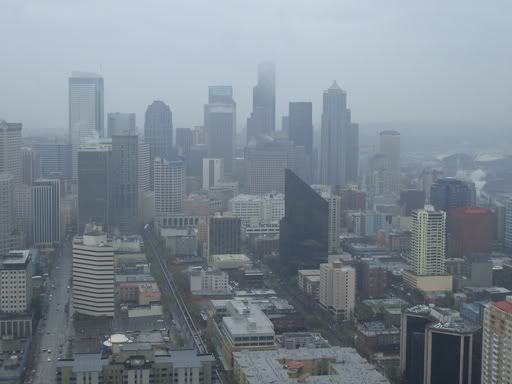
Seattle on a rainy dayBellevue might be an up and coming smartly planned city, according to national urban planners, but to Seattleites, it's nothing but that gas-guzzling, environment-killing suburban sprawl on the other side of Lake Washington. (Albeit with a great mall, not that anyone would admit it.)

North Cascade MountainsYou like driving more than biking? What is it with you and the destruction of Mother Earth? Cars aren't meant to be washed, waxed, enjoyed, or shown off. Oil changes and emissions control are performed on the pain of death. Cycling is good for you—leads to weight loss, thereby reducing the burden on the Good Ship Earth. Besides, "if you have a coronary riding up a hill," says Berger, "be reassured that Seattle is the 'Best Place to Have a Heart Attack' according to the Journal of the American Medical Association. So bike it and like it."

Pike Place MarketIn our lauded city, pets are people, too, even if they go on your shoe while clogging up your sinuses and scaring your child into a crying jag. So be mindful—in fact, this makes a good slogan for the city: Be mindful of everything no matter how transitory or miniscule—that the frou-frou doggie under your table on your feet could be a lawsuit waiting to happen if you open your mouth to complain.

What are some of the extreme characteristics of your city? If you've been to Seattle, do you agree with my assessment above?

Wednesday, January 7, 2009


Photos from Trip to India


Here are a host of photos that show me to be a card-sharp (winning hands of poker and bridge as proof), with henna on my hands, and in a rare saree display. My sister-in-law has great taste and her cousins great ability to pin me into the sarees (which I had to wear on three different ocassions).

I was so thrilled to see an 1839 coin minted by the East India Company. Pictures of the male peacock are especially for Anna Campbell. Check out my reticule for The Beau Monde Soirée at the RWA Conference in July. Puppets from Rajasthan, a mural with colored powders, and a fellow playing the flute with his nose (nope, I'm not making this up, see the evidence).

PJ, the first few photographs are by Hubby with his Canon digital EOS SLR.

Tuesday, December 23, 2008


Hey, Bhagwaan! Oh, God! – Vingettes of India


peacock"Aa-yo" comes a piercing cry and this beautiful bird lands gracefully in the garden. With its bobbing comb, arched brilliant blue neck, and distinctive tail feathers, it prances its way towards the bowl of seeds kept especially for it. On the way, it detours to dip its head into a cuppa tea left accidentally nearby.

Driving here is a series of misses with a style characterized by: you inch forward, you wedge, you bluff, you honk, and you pray like mad. I sit with my eyes shut tight. Traffic consists of everything that moves: camels pulling hay carts, hand-push carts of produce, trucks, bicycles, cars, and cows with horns (going the other way, naturally).

horned cowNow, we're not talking measely bone protrusions here. These cows have H.O.R.N.S. If a car and a cow were to come in intimate contact, the car would lose badly by being picked up and flung into the other side of the highway. Unlike the dumb cows back home, these cows are brilliant. Relatives up north had a padlock on the double main gate into the driveway. They said that some cows figured out how to hook their horns into the top latch to open the gate.

rickshawOf a sudden, a three-seater three-wheeler rickshaw darts forward on our left, with four people in the front, six in the back, discotheque lights, and hopping music. A shared taxi ride for the weary back home.

Towing a car implies a three-foot jute rope tied from the bumper of one car to the other. At least it wasn't the way we came down the mountains of Kerala during our honeymoon, coasting in neutral with the driver leaning out of his window rope in right hand, and a passenger in the jeep in front holding on to the rope in two hands.

No matter the technological advances on the international stage, education is a huge struggle for girl children. If Priyanka, a student in the sixth grade, is attending school, it is all because of a gritty fight her mother has been putting up at home. For her father, a watchman, girls have no business studying and wasting money. "Mother who works as a house-maid," says Priyanka, "would have none of it. She fought with my father to ensure that I go to school and not end up washing utensils." Priyanka wants to be a teacher.

camelThe Indian camels are one-humped, unlike Bactrian ones. After having examined them closely, I cannot imagine how a love scene that I read couple years ago on the back on a moving camel is remotely physically possible. How do you, er, hump when there's that huge hump in the center?

History talks about the cradle of theology as the Middle East, forgetting that four religions with billions of adherants flourish here in the subcontinent: Hinduism, Buddhism, Jainism, Sikhism.

Mosquitoes are in great supply in the Midwest, but they cannot hold a candle to these bee-like Indian ones. The only way to deter them from sucking you dry in the night are via British-Raj-style cotton mosquito nets. Très romantique.

Medieval cupboards with hooks as well as wall hooks for clothes are still the norm for clothing storage. Wealthier people indulge in heavy steel vaults for jewelry, which is worn by even the poorest folks.

banyan treeCute donkeys with silky white mane, temples with amazingly delicate filligree stonemasonry and vivid painted scenes, a sudden swath of long-legged white cranes taking off from salt paddies, and enormously wide banyan trees line roads winding through fields of wheat and cotton. It's a reminder of the historically wealthy agrarian kingdoms of South Asia that were willy-nilly, and reluctantly, thrust into the Industrial Age by the advances of the British Empire.

Queen Victoria as Empress of IndiaThe world's most extensive rail system, the telegraph, the parliamentary system, and the English language employed so eloquently by Gandhi and Nobel laureate Tagore (much to the fury of Rudyard Kipling) are some of the many legacies of the British rule. Along with those are the memories of the brutal Jalianwala Baug massacre, theft of the Kohinoor diamond (now part of the English royal collection), and indigent poverty.

There are three taps of water coming into every house, none of which is hot. Water in one tap (i.e., bacteria soup) comes from the town for one hour early morning and one hour in the evening. So backyard tanks have to be filled up with water. Who knows when those tanks are cleaned. So now we have local flora and fauna flourishing in there, in addition to, city-provided bacteria. This water comes through the second tap. Water for drinking has to be irradiated, so there's a device for that and clay pots have to be filled. This is the third tap. Hot water has to be boiled on the stove, except for a special heater that is installed just for bathing water.

Father-in-law's temple is being designed by committee and architected by the entire village. So the, er, shape is unique—no two windows are alike and all the colors of the rainbow have been utilized with artistic freedom. Since the temple is being built for this ancestral village and is dedicated to the memory of his father who was head of the village, everyone just has a good laugh over every meal and is satisfied that the villagers feel ownership towards their temple.

At the end of the day, it's just that. Laughter. The reason that makes this country work and its people survive a 5000+ year tumultuous history. My entire year's laughter is crammed in these four weeks.

Friends and Romansistas, may your holiday celebrations have tons of laughter.

Historical Romance author Christine Wells has been traveling to all sorts of fun places for the last three months: New Zealand, Japan, The Great Barrier Reef, and a beach resort. Check out her adventures here.

Wednesday, November 26, 2008


We're Safe!


Logging in from Singapore's Changi airport. Twenty-nine hours after we left Seattle, here we are. And no, seven hours later, we're not headed into Mumbai, the site of these horrific attacks.

Thursday, November 13, 2008


Travel, yo!


Travel plans changed all of a sudden last night. No, no, nothing alarming. It's all good. Hubby discovered more time off on his work schedule. So, in less than ten days, we're off on our annual pilgrimage to the other end of the earth visiting every relative in Hubby's bushy family tree.

Doctor to visit, holidays cards to write, gifts to buy and mail, thousand and one things to cross off list....Watch Keira work herself into a tizzy. (I think the school teacher is the most stressed out of everyone involved. She has to prepare the homework kit. Heh.)

Wishing everyone a Happy Thanksgiving, Happpy Kwanza, Happy Hanukkah, Happy Yule, Merry Solstice, Merry Christmas, and a Happy New Year. Oh, and try to have a smashing New Year's Eve, too, if you can, and do eat my share of the turkey, too.

See you in the new year...

Sunday, September 28, 2008


If Home Were To Be England...


Risky Regencies Romance Bandits Drawing inspiration from Anna Sugden of Romance Banditas’s list of what moving home to England for her was like and from Amanda McCabe of Risky Regencies’s list of her sightseeing plans of England, here’s my list of what I would do if I had the opportunity to call England home for once in my lifetime for a few moments (read that as: months).

First the assumptions. I would have to be a lady of a certain age and certain independent means if I have to achieve this dream.

Big BenSoane Museum 1. I can rent rooms at a hotel in London for a few weeks, at Oxford for a few weeks, then a few other sites, and finally settling in Bath.

2. Hang the unpacking. Sightseeing's going to be foremost on the agenda in London, and that's going to mean the Tower, the V&A Museum, the British Museum, the British Library, Hyde Park, Mayfair, London townhouses, watch Shakespeare at the Globe Theater, Sir John Soane's Museum, Devonshire House, Windsor Castle, and the list is endless. The only stopping point is going to come when I'm exhausted.

Radcliffe Camera, OxfordChatsworth 3. Then I'll hie myself off to Oxford and stay with my cousin. From that vantage point, I can reaquaint myself to the beauty and peace and splendor that's Oxford. Perhaps I can inviegle a couple history classes from their education outreach programs.

4. Derbyshire and the Peaks and Lake districts, then it's off to Bath and rooms at a bed & breakfast. This is where I hope to remain for the majority of my staying: working and writing.

Bath Crescent5. Staying at a B&B and walking everywhere is an absolute must for me to integrate myself into the fabric of the place I'm in.
6. Buying groceries, eating local produce, delicious curry take-aways, talks with regulars who sit in the main church square...food and conversation make for good starts to friendships.

7. Working in a place increases the stake I have in the community. When I'm paying taxes, I start caring what those taxes support. Getting to know people I work with also means I care what their concerns are.

8. Similarly, attending the parish church on Sunday mornings and joining the choir further enmeshes my square into the town's quilt. I'm not a fan of organized religion, but music makes my heart sing.

9. Resume my building up my collection of Enid Blytons. My goal is to own every known EB book published by her (not by other authors in her name) before she passed away.

10. Squirelling away a lifetime's worth of memories, sights, smells, sensations, tastes, touches, sounds for when I return and miss England with a visceral ache.

RomanistasSo, Romanistas...
What would your dream location be? And would you like to permanently move there, or just for a while?