

Monday, December 10, 2012


Careful or You’ll End Up in My Next Novel


A T-shirt with a message of "Careful or You’ll End Up in My Next Novel" is a common sight at writers' conferences.

However, in the case of Angela Hargreaves, her own neighbors in Eccleshall, Staffordshire, are accusing her of skewering them in her erotic e-novel Rotten Row.

On Amazon, the book is described thusly: "[The story contains] tales of love, death, nostalgic regret, sexual encounters, romance, marriage, divorce and desperate times but ultimately how quickly our fortunes can and do change. [It] is about the petty spitefulness and complexity of living in close proximity to some neighbours."

The Daily Mail writes, "Authors often base their novels on their own experiences, over-heard conversations or eccentric characters they may have met throughout their lives." But as author Anne R. Allen writes, "I've tried to skewer a few real people in my fiction, but it never works. The character always takes over and makes herself sympathetic, and/or entirely different from the person on whom I tried to perpetrate my literary revenge." Even John Steinbeck admitted the impossibility, "I have tried to keep diaries, but they didn’t work out because of the necessity to be honest" to the character.

However, Hargreaves' neighbors see themselves in the steamy scenes and saucy characters. One person said, "...the book had caused 'major problems' and that there have been 'a lot of tears shed'. How would you like to live next to somebody who was writing things that were talked about in private into black and white? It is unreal."

Hargreaves is quoted by The Daily Mail saying, "The characters in Rotten Row are fictional and many of the things that happen in the book didn't happen at all."

As a counterpoint to this is this blog by Tamara Hunter on February 28, 2012. At the Perth Writers Festival this year, author Michael Sala said, "You have this terrible, terrible power as an author. You can literally take revenge on everyone if you want to. They’re all subject to how you design the story. You have got to be a little scared of that, I think." Sala's debut novel is The Last Thread, a fictionalized version of his own turbulent and secrecy-filled childhood.

Writer Rachel Robertson said that in her book Reaching One Thousand she "saw it as a mark of respect in a way to change the names. By using different names and being honest about them I am reminding the reader: ‘This is my take on this. This isn’t what really happened or the whole truth. This is my understanding’." Then again there's screenwriter, blogger and broadcaster Marieke Hardy, whose acerbic, voyeuristic, and entertaining memoir, You’ll Be Sorry When I’m Dead includes revealing stories about ex-lovers, passionate friendships, and a swingers’ party, said that "in her case, the decision to use real names felt more honest and honorable."

What ethics do you think should form the moral map for a writer?

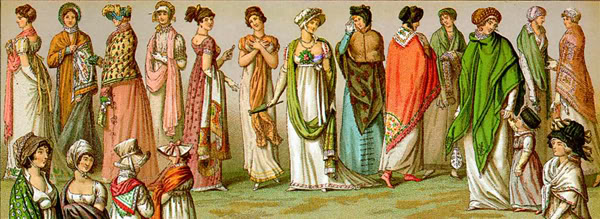
[An interesting historical side note: Rotten Row was the area on the south side of Hyde Park in London where the fashionable young of the nobility rode decorously every morning in the Georgian and Regency period. It was also a fashionable place for upper-class Londoners to see and be seen during the afternoon promenade time.]

Friday, December 7, 2012


Picture Day Friday: Thari Women


Thari women from Pakistan's Sindh district that's part of the vast Thar desert. Culturally, they're related to India's Rajasthani desert nomads. Religiously, they're very much in the minority with their belief in Hinduism. Dhatki is the main language spoken in the Tharparkar region of Sindh where many of the Thari live.

In complete contrast to the monochromatic desert landscape they live in, the Thari have created a culture that is vibrant, colorful, and full of life. They are the world's premier environmentalists, in that, preservation and conservation are bred in them from birth.

Their livelihood is entirely dependent upon the rains during the monsoon season and deep wells the rest of the year. Thus water has informed their food consumption, culture, lifestyle, entertainment, dress, as well as their personal attitudes and values.

Commercially, the Thari are involved in handcrafting pottery, puppets, leather items, wood items, carpets, metal decorations, block prints, embroidered shoes, embroidery beading and mirror work on clothes and tapestries, painting, colorful and intricate jewelry, among other works of art and craft. The handicrafts are distinguished by their bright, cheerful colors.


Monday, December 3, 2012


Writing Advice by the Famous


A couple years ago, UK's The Guardian ran a list of dos and don'ts of writing fiction by well-known writers. Here are some highlights:

"Increase your word power. Words are the raw material of our craft. The greater your vocabulary the more ­effective your writing. We who write in English are fortunate to have the richest and most versatile language in the world. Respect it." —P.D. James, British mystery author

"Beware of clichés. Not just the ­clichés that Martin Amis is at war with. There are clichés of response as well as expression. There are clichés of observation and of thought—even of conception. Many novels, even quite a few adequately written ones, are ­clichés of form which conform to clichés of expectation." —Geoff Dyer, British journalist

"Style is the art of getting yourself out of the way, not putting yourself in it." —David Hare, British playwright and theatre and film director

Never complain of being misunderstood. You can choose to be understood, or you can choose not to." —David Hare

"A story needs rhythm. Read it aloud to yourself. If it doesn't spin a bit of magic, it's missing something." —Esther Freud, British novelist and actress

"Trust your reader. Not everything needs to be explained. If you really know something, and breathe life into it, they'll know it too." —Esther Freud

"The reader is a friend, not an adversary, nor a spectator." —Jonathan Franzen

"Don't read your reviews. Don't write reviews. (Your judgment's always tainted.)" —Richard Ford, American novelist

"Don't drink and write at the same time." —Richard Ford

And perhaps the most obvious and the most important:

"Write. Put one word after another. Find the right word, put it down. Finish what you're writing. Whatever you have to do to finish it, finish it." —Neil Gaiman, British author

Friday, November 23, 2012


Picture Day Friday


Ye Olde Fleece Inn is located at 14 Highgate in Kendal, Cumbria. Established in 1654 as a flourishing posting inn, it still boasts a thriving business. Food served is typical British fare, including Hanky Panky Pie (!!), and dozens of ales. Normal modern full-bar range of drinks are also served.


Image is copyrighted by Adam Bruderer.

Monday, November 19, 2012


Lord Byron was a fan, too!


When we idolize our favorite authors, we tend to forget that they, in turn, idolize other authors.

The first time this was brought home to me was when I attended my first annual conference of the Romance Writers of America in Dallas in 2007. As I squealed and babbled over my role models and beloved writers that I met in the hallways, in elevators, and of course, in the bar (best place to hang out at RWA!), I saw them also greet other authors with likewise delighted squeals.

I suddenly realized, that yeah, they're human, too, and readers first, authors second. They, too, love books just like I do and treasure their best-remembered reading experiences just like I do. Suddenly, these New York Times bestseller authors didn't seem so out in the stratosphere for the lowly aspiring author in me.

So it came as no surprise to me, when I came across this article in the UK Huffington Post that talks about a copy of Frankenstein that belonged to Lord Bryon and features an inscription by Mary Shelley has been discovered. Byron was a Shelley fan. I get just how he felt. (Click on the link to see a photograph of the inscription.)

Monday, November 12, 2012


High Tea: Pinky Up or Down


High Tea, as a tradition, has humble beginnings. It was traditionally served at around five in the evening at farms all around Britain's countryside. At the end of a long day that began before dawn, farmers and farm workers returned home tired and hungry. Along with cups of strong tea, served with milk and sugar, platters of hearty sandwiches (with meat, cheese, and veggies) and pastries (such as scones, tea cakes, jam rolls, etc.) were also served. An informal meal, it was consumed at the kitchen table, which originally had high stools in lieu of chairs for seating, hence the name "High Tea." This was the main meal of the evening followed up a light supper at eight o'clock.

Image copyrighted by Love Bites http://www.flickr.com/photos/58139202@N07As urbanization became more and more the norm, the rituals around high tea also shifted. It became more of a stylish and less hearty meal, more of a fancy tea, and was consumed between three and four o'lock in the afternoon. The dining room with a neatly laid out service—of fine bone china, exquisite linen napkins, crystal stemware, and real silver eating utensils—became de rigueur. Delicate finger food was served with a variety of lightly-brewed teas. Sandwiches and pastries still featured highly on the menu, but the smaller size of the offerings allowed for tiered serving dishes and lace doilies.

Modern High Tea is very popular in the UK as well as in Canada, the United States, New Zealand, and Australia.

Image copyrighted by Love Bites http://www.flickr.com/photos/58139202@N07 Tea is served with warm milk, sugar, lemon, and honey. Hot water is brought to the table in a ceramic jug along with decorative tins of various tea leaves. First, the teapot is rinsed out with hot water to warm the pot. Tea is spooned in, one for each cup of tea plus one for the pot. Appropriate quantity of hot water is poured in and the teapot's covered with a decorative, quilted tea cozy. The tea's allowed to steep for 5–7 minutes, after which it is carefully strained into each cup.

Sandwiches have to be cut into neat triangles and the crust removed. Typical fillings, include cream cheese and lox, cucumber and butter, pâté, smoked trout and horseradish, roast beef with mustard and watercress, crab paste with brandy, etc. Mayonnaise and sliced cheese are supposed to be a big no-no.

Scones are served with "fillings" in small bowls, such as fresh clotted cream, lemon curd, jams, and fruit preserves.

Savory pastries, such as mushroom and chevre tarts, florentine quiches, sausage rolls, cheddar bites, etc. are also served.

Image copyrighted by Love Bites http://www.flickr.com/photos/58139202@N07 The meal's rounded out with sweet pastries, such as jam tarts, mince pies, pecan tartlets, fruit flan, madeleines, raspberry linzers, cheesecakes, lemon bars, shortbread biscuits, custard kisses, sponge cakes, frosted fairy cakes, etc.