Picture Day Friday: Cool Library of Montclair
This is the stairwell of the main branch of the Montclair Public Library in New Jersey. To me, this magical stairwell is emblematic of the magic of books.
[Image courtesy of Sarah Wendell.]
This is the stairwell of the main branch of the Montclair Public Library in New Jersey. To me, this magical stairwell is emblematic of the magic of books.
[Image courtesy of Sarah Wendell.]
Write back:
0
comments
Posted on:
3/29/2013 07:31:00 PM
Labels: Business: Libraries, Research: FineArts
Copyright 2006–2023 Keira Soleore (keirasoleore.blogspot.com)
You guys totally knew this, right? Of course, reading Jane Austen stimulates the brain. How could it not? Take wit, erudition, laughter, high emotion, lovable characters, happily ever afters, pointed social commentary, and DRAMA; shake it up; apply Austen's prose skills; et voilà—an enduring masterpiece.
Natalie Phillips, an assistant professor of English at Michigan State University, is studying how reading Jane Austen's work affects the brain in a study at Stanford University.
According to the Pittsburgh Post-Gazette, "[Phillips] places volunteers inside an MRI scanner, hooks them up to eye-tracking equipment and asks them to read—on a mirror above them—the second chapter of Mansfield Park." In order to test her hypothesis, she needed a a work of fiction that worked as both a beach book and a critical literary work, and Mansfield Park fit the bill.
"The impact on the brain was far more extensive than she had expected. When the students engaged in critical reading, there was a notable expansion of activity in regions of the brain outside those responsible for executive function, which are normally used for paying close attention to a task like reading. Significantly, there was activity in areas associated with physical activity and movement, parts of the brain we use to place ourselves spatially in the world, as though the readers were actually physically present in the story. Concentrated, close reading activated unbelievably widespread parts of the brain that are immensely cognitively complex, on a par with doing hard math problems or working through computer code."
Please visit the Pittsburgh Post-Gazette for more details.
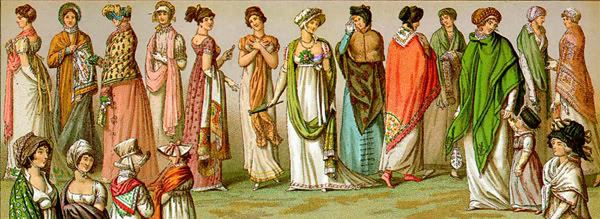
193 years later, Jane Austen still rules!
Write back:
0
comments
Posted on:
3/27/2013 08:45:00 AM
Labels: Leisure: Reading, Research: Regency
Copyright 2006–2023 Keira Soleore (keirasoleore.blogspot.com)
The Romance Writers of America (RWA) is the trade association for aspiring and published romance fiction authors. They announced the 2013 finaists for their RITA and Golden Heart awards earlier today. "The RITA recognizes excellence in published romance novels and novellas. The Golden Heart recognizes excellence in unpublished romance manuscripts." The winners of the awards will be announced on July 20 at the annual conference in Atlanta. Here are some of the finalists for the RITA. Go HERE for the full list.
Historical Romance Finalists
Beauty and the Bounty Hunter by Lori Austin
Bride by Mistake by Anne Gracie
Defiant by Pamela Clare
A Lady Never Surrenders by Sabrina Jeffries
The Recruit by Monica McCarty
A Rogue by Any Other Name by Sarah MacLean
Too Dangerous to Desire by Cara Elliott
Wedded in Sin by Jade Lee
Romance Novella Finalists
Breathless by Sophie Jordan
The Duchess of Love by Sally MacKenzie
“Room at the Inn” by Ruthie Knox in Naughty & Nice
Seduced by a Pirate by Eloisa James
“Sleeping with a Beauty” by Leslie Kelly in Once Upon a Valentine
“The Valentine’s Curse” by Jodi Thomas in Be My Texas Valentine
Contemporary Single Title Romance Finalists
About Last Night by Ruthie Knox
Barefoot in the Sand by Roxanne St. Claire
Forever and a Day by Jill Shalvis
Lucky in Love by Jill Shalvis
Melt into You by Roni Loren
Sugar Springs by Kim Law
The Way Back Home by Barbara Freethy
Zoe’s Muster by Barbara Hannay
Write back:
0
comments
Posted on:
3/26/2013 03:37:00 PM
Copyright 2006–2023 Keira Soleore (keirasoleore.blogspot.com)
This video by the Getty Museum shows a few pages of a medieval calendar. The medieval calendar, in portrait mode a page a month, served as a map of the Church year. While following the method of the Roman calendar in determining dates, it also listed saints’ days and other religious feasts and recorded the phases of the moon. Many calendars also featured related illustrations of saints, feasts, monthly labors, leisure activities, and signs of the zodiac. They, too, divided their month into weeks, but the first day, ninth day (nonce), and fifteenth day (ides) were the most important days and people referred to other days of the month in relation to these three; for example, the 17th of the month was two days after the ides.
Write back:
0
comments
Posted on:
3/25/2013 09:26:00 AM
Labels: Research: EarlyMiddleAges, Research: HighMiddleAges, Research: LateMiddleAges
Copyright 2006–2023 Keira Soleore (keirasoleore.blogspot.com)
St. Vitus Cathedral is located in the Prague Castle of the Czech Republic. It is the spiritual home of the country, because St. Wenceslas, the Czech patron saint, is buried there. It was built by Peter Parler. The photo below is the nave from the viewpoint of the eastern choir.
The Prague Castle was built around 880 by Prince Bořivoj of the Premyslid Dynasty. It is said to be the largest castle complex in the world with an area of almost 70,000 square meters. Buildings still standing are from the 10th century through the 14th century. Most of the twentieth century has been spent in renovations and restorations of this medieval wonder. The Prague Castle has been deemed a UNESCO World Heritage site.

[Image courtesy of the Prague Castle website.]
Write back:
0
comments
Posted on:
3/22/2013 08:48:00 AM
Labels: Research: Architecture
Copyright 2006–2023 Keira Soleore (keirasoleore.blogspot.com)
Many castles in Scotland, England, France, Germany, and other European countries are up for sale these days as the costs for maintaining these edifices is constantly rising. However, a castle for sale rarely comes with its corresponding title. In this case, Fordyce Castle is accompanied by its barony title. A few years ago, I had visited Aberdeenshire. Pity I didn't venture out to see Fordyce.
The castle in located in a village off the Banffshire coast in NE Scotland, 45 miles from Aberdeen airport. The L-shaped tower house has three floors with a corbelled stair tower, shot holes through which to fire upon besieging enemies, and with a nod to modernity indoor plumbing and under-floor heating. The castle itself and the cottages on the property have all been upgraded to four-star holiday accommodation as a bed and breakfast inn. It is said that it can be reverted partially or completely into a family estate.
Thomas Menzies, former lord provost of Aberdeen, built the castle in 1592. It stayed in the Menzies-Dunbar families, until it passed with heiress Ann Dunbar to the Ogilvie-Grants on her marriage to James the 1st Earl of Seafield. It changed hands, including foreign hands (Portuguese and German) before being restored in 2000 by Robert and Fiona Ogilvie McVeigh-Crabbe as their family home. The Castle was A-listed inside and out, so the Crabbes had to work closely with the Historic Scotland society for permissions to do any work.
Now for the low-low price of 800k pounds, you could be a proud owner of a castle and have everyone address you as Baron Fordyce or Baroness Fordyce or my lord or my lady.
Write back:
0
comments
Posted on:
3/20/2013 11:57:00 AM
Labels: Research: Architecture
Copyright 2006–2023 Keira Soleore (keirasoleore.blogspot.com)