

Monday, November 5, 2012


Home Offices


Office supplies and home offices are my two favorite hobbies after buying and reading books by the pound. I'm trying to curb my book and supplies buying addictions, but conversely, indulging my home office gawking since it's free.

The Internet is a great resource as are magazines. On the few occasions that I have sat down to design my own office, I've discovered that I'm never as creative as these people with the purchasing and/or the placement of furniture, furnishings, and extras. That is why I love perusing other people's creativity.

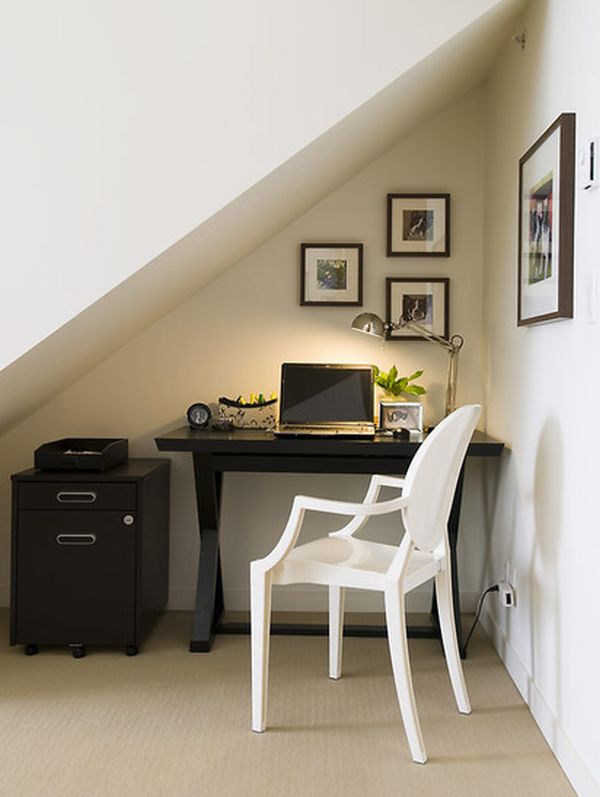
Expansive home offices by HGTV are HERE and Decoist's creative offices for small spaces are HERE. Which ones are your favorites of them all? (Please note: all images are copyrighted to either HGTV or Decoist.)

This is my top favorite. I find I like a lot of light in my home office: large windows and lamps plus light woods for furniture (not ceramic, metal, or any other non-wood materials), light-colored walls (not necessarily only beige or oatmeal, but light yellows, too) and high ceilings. What this does is that the rows of books on the walls of bookshelves provide the color in the room and pull attention to them.
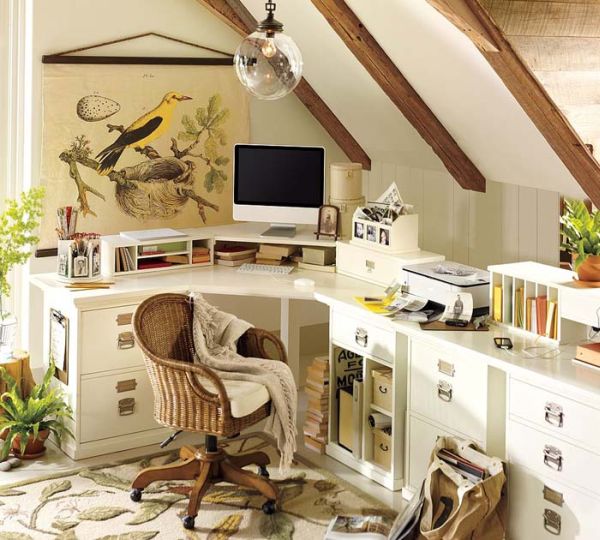
Compact home office images copyrighted by Decoist.com

This gets my Most Creative vote:

Compact home office images copyrighted by Decoist.com

Monday, October 22, 2012


New Sub-Genre of Romance


I recently came across a new sub-genre of romance: New Adult. In my quest for an in-depth definition of this new sub-genre, I came across this blog from September 16, 2012 by NA Alley.

The basic definition of New Adult is that it starts when Young Adult ends and ends when Adult starts. By this I mean, for a contemporary fiction novel, the age range for the protagonists is 19–25. There are plenty of people who would say that 19 is really YA and not NA, and in our modern times of the 2010s, the upper range for NA should include the very young 30 also.

The definition gets tricky where historical fiction is concerned. Take Regency-set romances: heroines typically are 17 or 18 on the lower end and by historical society standards, they're adults, not young unattached independent adults (i.e., NA) but full-fledged adults. So would these books come under NA or A? Well, according to NA Alley, it depends on the emotional maturity of the characters.

For heat level in a NA romance, expect the same levels as elsewhere in romance, namely, sweet, sensual, spicy, and erotic.

I hasten to add that contemporary NA is not chick-lit, or rather, it doesn't have to be chick-lit. It can involve all sorts of human life situations and events, just so long as the emotional maturity level and ages of the protagonists remains at the early adulthood level.

For author promotion efforts, NA Alley recommends that writers seek college bookstores and newspapers and NA-friendly social networks.

The NA category is so new that it's not a classification that's widely known even within the publishing industry. So you cannot walk up to a Barnes & Noble employee and ask where they have these books shelved. They're most likely going to be shelved with the adult books.

Note: As of today, Harlequin's Carina Press is open for submissions in the New Adult category.

Monday, October 15, 2012


Missing Pieces in the History of the World


Who and what events and discoveries would you include if you were compiling a History of the World? The BBC came up with their list of most oft overlooked moments. Here are a few:

1. "In 1909, Fritz Haber and Carl Bosch created a way of producing huge amounts of" industrial-grade ammonia for use in fertilizers.

2. "Ibn al-Haytham was born in about 965 in what is now Iraq, and is regarded by some by some as the real father of the scientific method, predating Francis Bacon and Rene Descartes in the 17th Century. He was [also] the first to disprove the theory that we see objects by rays of light emitted from our eyes, realising instead that we see because light enters our eyes."

3. The Danube Script found on Neolithic artefacts is as yet undesciphered and archeologists have not been able to decide whether it is indeed one of the earliest forms of writing or just random, ritualistic symbols.

4. "Double-entry book-keeping, which [was] introduced to Europe in the early 16th Century by the monk Luca Pacioli, is a financial accounting system that [recognizes that] all transactions have two aspects, a credit and a debit, and the two sets of figures [must] always balance."

5. The Seven Years' War (1756-1763) was truly the first World War, since it "involved all the great powers of Europe and saw France, Austria, Russia and Sweden on one side, and Britain, Prussia and Hanover on the other."

6. The Kingdom of Aksum (Axum) in north-eastern Africa became one of the world's greateast markets in the first century CE. It was one of Rome's great trading partners and was characterized by a "highly innovative urban civilisation."

7. The Law Code of King Hammurabi (1792-1750 BCE), the first ruler of the Babylonian Empire, are written in Akkadian, include concepts such as evidence-based justice and giving testimony under oath. Hammurabi "adorns the wall of the American Supreme Court."

8. Angkor Wat of 9th–12th century Cambodia was the "largest pre-industrial urban complex in the world" of its time, with "sophisticated hydraulic engineering and water management systems."

Monday, October 8, 2012


Guardian's Crime Fiction Recommendations


The UK newspaper The Guardian recently posted an open thread blog for best crime fiction among its readership. They asked: "Who are your favourites, and which are their best books? Let's have a brainstorm and see what we can come up with."

This is what I recommended: "From the classics, nothing beats Dorothy Sayers and Ngaio Marsh. Josephine Tey and P.D. James, in the same style, run a close second. From the modern crop of writers, Ruth Rendell and Deborah Crombie are superb as are Elizabeth George's early books. For a historical turn of events, I find C.S. Harris marvelous. Another historical mystery writer I really enjoy reading is Elizabeth Peters. She writes Egypt-set British Victorian mysteries. For all of these writers, my key takeaways are their protagonists—enduring, finely drawn, with new nuances revealed about them in every book, aka character growth and change—and scene setting and complex mystery plotting skills."

The comment thread's now closed but has close to 50 entries. It's a great spot to find authors who are new to you. My discoveries were Paul Doherty and his historical mysteries particularly the medieval ones, Margery Allingham's classic British crime series, and Margaret Frazer's medieval books.

The Guardian started the thread off mentioning Peter May, but he seems to be an oft occurring theme among the readers, too. P.D. James pops up, as does Dorothy L. Sayers. A tip o' the hat to the Scandinavian writers, who became so popular from the mid-1990s, and to Japanese writers. There was even a call-out for Russian author Dostoyevsky's books, though what he would've thought of his work being classified as genre fiction as opposed to über literary fiction is anybody's guess.

One significant name missing from the list is John Le Carré, but it's difficult to figure out which category books come under. They rarely fall under crime/mystery/thriller, but his field is very narrow these days, so I wonder if it can be bundled under the thriller category. Those books are ones that should not be missed!

Which myster, crime, spy, or thriller novels are your favorites?

Friday, September 21, 2012


Picture Day Friday: Medieval Tower at the Beach


Guidaloca Beach, at a natural bay on the island of Sicily, is overlooked by a 16th century watchtower, which still stands at the western end of the beach.

Image copyrighted by http://pics.classifieds1000.com/members/Scopello_property/Italy/real-estate:Property_in_Scopello_Sicily_unique_location/Medieval_tower_over_Guidaloca_Beach

Monday, September 3, 2012


Compiling Dictionaries: by Crowdsourcing or by Subject Matter Experts


Image copyrighted by SailorJohn at http://www.sxc.hu/photo/1090781 In an ongoing battle between which words are appropriate to enter into a lexicon, Deborah Cameron, who teaches linguistics and grammar at Oxford University, wades in with an op-ed on Berfrois.

Citing that the original edition of the venerable Oxford English Dictionary (OED) was likewise crowdsourced, the Collins Dictionary seeks to have ordinary citizens contribute words, word usages, and meanings for its next edition. The aim to describe current usage of words. The reason Collins is doing so is an attempt to try to stay on top of the rapidly evolving English language as well as free online sources, such as Wiktionary, YourDictionary, and even UrbanDictionary.

Do you think this populist venture undermine the credibility of the dictionary or will it add currency and give it a more modern feel?

Image copyrighted by topfer at http://www.sxc.hu/photo/993325 Casual users find the OED conservative, elitist, and out-of-touch with ordinary language. Not only are everyday words not entering the lexicon in real time, those words may not even make it into the lexicon, because by the time the dictionary gets overhauled, the words are no longer in popular memory. History is lost.

However, scholars, journalists, and writers find the OED's focus on the full etymology, history, of the words invaluable as they do the OED's cultivation of a reputation for impeccable scholarship.

In the end, what it comes down to is curation. The editors of the OED have always been meticulous about editing and fact-checking the entries sent in by their legion of volunteers. Will the Collins be likewise vigilant? Otherwise, it's a case of fallen standards: seeking populism while losing its traditional market.