My comments on Richard Bach's seminal book, Jonathan Livingstone Seagull, were published in the American Chronicle on September 10. However, I reproduce them here in their entirety, since the book had such a profound effect on me that I'd like to share it with you.
 Much has been written about Jonathan Livingstone Seagull by Richard Bach. Some say it's a self-help book that ascribes to the positive thinking culture that's currently in vogue in the U.S. Others say it has Christian anarchist characteristics. Some consider it a deeply spiritual book, whereas Roger Ebert considers it "banal." The book has sold millions of copies and has even been made into a film with a soundtrack by Neil Diamond.
Jonathan Livingstone Seagull to me is about the pursuit of excellence in life, the limitlessness of human potential, and the ability to be hopeful and joyful in every situation.
"How much more there is now to living!" Jonathan Livingston Seagull said about his acquisition of superbly fine control over his body at tremendous speeds. "Instead of our drab slogging forth and back to the fishing boats, there's a reason to life! We can lift ourselves out of ignorance, we can find ourselves as creatures of excellence and intelligence and skill. We can be free! We can learn to fly!"
Jon was born with a blazing drive to learn and to achieve, all for the joy of doing it. Flying made him happy. He was dedicated to his goal of learning to fly faster and higher than ever before, and he had an expectation of excellence from himself. In fact, he didn't just expect excellence, he demanded it of himself.
 As he pursued flying, Jon learned that failure wasn't an option he allowed himself. He remained hopeful even when he didn't achieve his goal immediately, but rather, he developed the art of patience as he practiced over and over and over again. He adhered to his rocky path towards excellence not for approval of others or adulation from others, but for himself. He was his own taskmaster, his own yardstick of excellence. He believed that "You know nothing till you prove it." And so he did: to himself and to others.
He never lost confidence in his ability to achieve his goal despite naysayers and despite being cast out of the flock for being unnatural for having ambition and for dreaming of a better life. He remained hopeful of his life and his goal in the face of misunderstanding.
"Everybody is special and gifted and divine." And when he recognized this within himself, it set him on the path to freedom. Freedom then became "the very nature of his being." "You are free to go where you want to go and to be what you want to be. You have the freedom to be yourself, your true self, here and now, and nothing can stand in your way." And whatever stood against that freedom must be set aside.
 He believed in the innate intelligence within himself that allowed him to imagine a life beyond the usual, beyond the lives his ancestors had lived. There's freedom in innovation—innovation rather than discovery—in creating something new, in becoming more than what was before.
It was only in the twilight of his days, did Jon realize that it is only in urging a pupil to discover excellence in himself does a teacher achieve a high state of self-actualization. Jon also realized that while you don't love hatred and evil, you have to see "the good in every one, and to help them see it in themselves."
And at the end of the day: he was just a seagull.








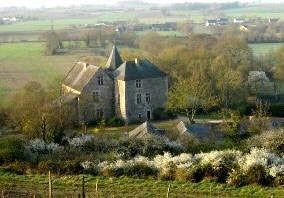 If you have a few millions euros lying around, may I suggest purchasing this beautiful Château Chanzé in the Loire Valley of France?
  Chanzé has a pedigreed history. From the eleventh century onwards, the castle has stood on the banks of the river Layon, a tributary of the Loire. King Henry IV is reputed to have stayed a night on his journey south. In the latter half of the 19th century, efforts began to restore the castle. In 1993, the present owners, Heinrich and Maria Albertina Stoesser-Gliott of Switzerland bought the estate and completed its restoration.
 Chanzé sits on six hectares of land and is currently operated as a bed and breakfast inn and restaurant. The property comes with four cottages that house up to 14 guests. For privacy, your personal space will be separated from the B&B by 5000 square meters of gardens.
  Into this climate, the doyenne of British classic crime
  To me, James is a mystery writer extraordinaire as compared with any other mystery writer I have ever read. And next to romance fiction, mystery is what I read the most. Also, My love of Austen is known to you all who read this blog. So a James meets Austen? I nearly fell off my chair when I heard about it.